By Pavle Kraishnik, Account Executive, Advertising at Invenda Group.
Two weeks on from the last edition, here are the advertising signals I think are actually worth a media buyer’s attention right now, and what they mean once you start planning around them.
A couple of updates have landed since I last wrote, and two of them stuck with me. One points to where programmatic DOOH is heading at a structural level. The other reframes where the real growth inside the channel is actually coming from. Two different signals, one clear direction: the buyers and networks building for accountability and proximity to the transaction are the ones that will define what DOOH looks like in three years.

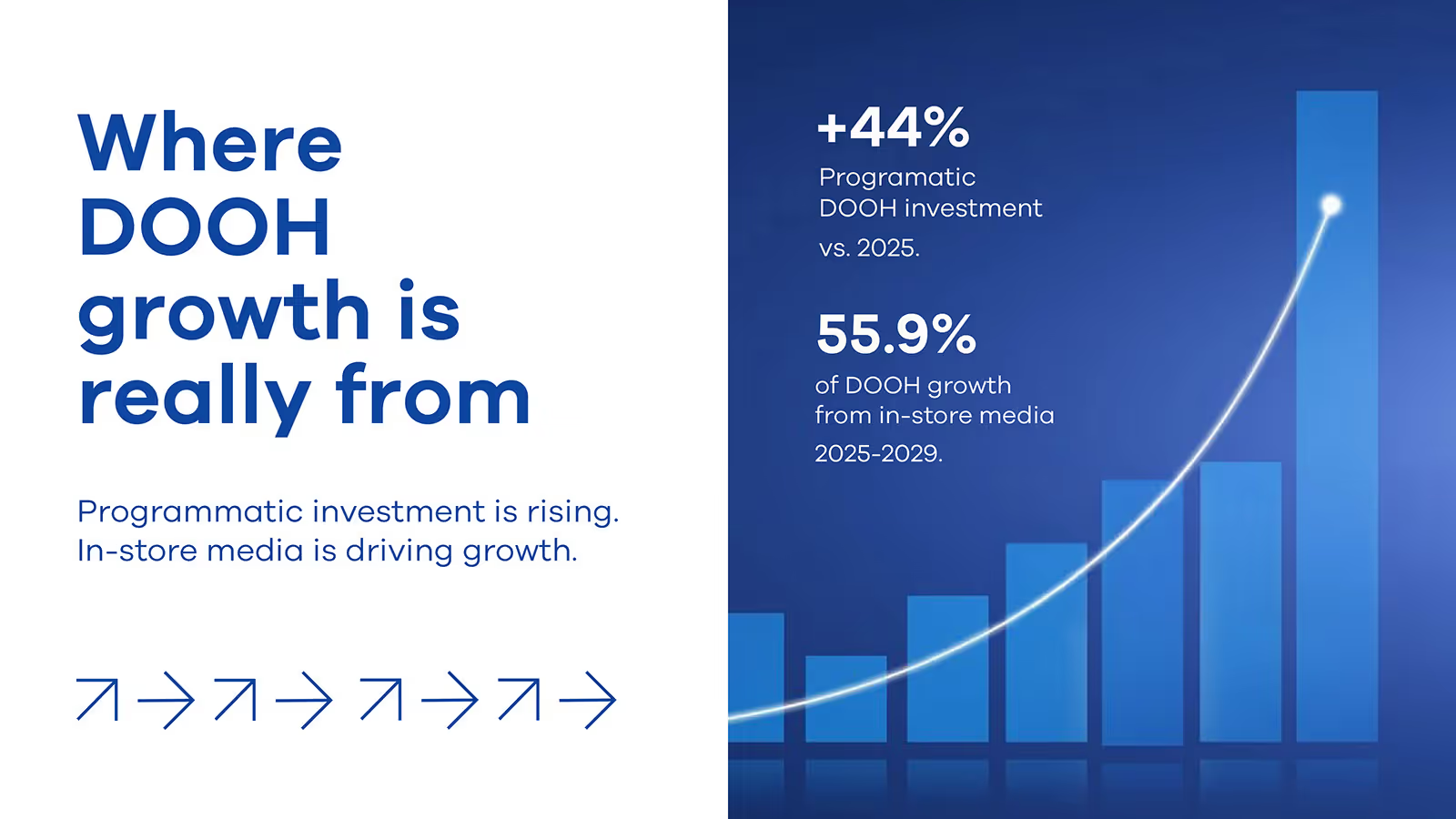
What happened: VIOOH's 2026 State of the Nation report projects a 44% uplift in programmatic DOOH investment over the next 18 months, with pDOOH on track to appear in nearly half of all campaigns globally. The agency side of the data is just as telling: dedicated pDOOH teams at agencies have grown from 32% to 53% in two years.
My take: The 44% figure is significant, but the agency structure shift is what I keep coming back to.
When more than half of agencies now have a dedicated programmatic DOOH function, that's not a trend anymore. That's a permanent change in how media gets planned and bought. It means DOOH inventory that can be activated programmatically is no longer a nice-to-have for media owners. It's a prerequisite for being included in serious campaign planning.
For media buyers, this is the moment to get your DOOH workflows properly connected to your DSP stack. The networks that are already integrated are going to attract disproportionate spend as that 44% growth lands.
At Invenda, this is exactly where our Atlas platform sits. Our inventory is already accessible programmatically, and we're not waiting for the wave, we're already in the water.

What happened: A 2026 retail media analysis from Osmos projects that in-store retail media will account for 55.9% of total DOOH channel growth between now and 2029. The driver is attribution: when the ad screen and the purchase happen in the same physical environment, campaign performance becomes measurable in a way that traditional OOH placements cannot match.
My take: More than half of this channel's growth is coming from screens that are inside the buying moment, not near it.
That is a meaningful distinction. A roadside billboard or a transit screen reaches people who may or may not be in a purchasing frame of mind. A screen at the point of sale reaches someone who has already stopped, already decided to transact, and is actively making a product decision. The context is completely different, and the data is starting to reflect that.
The attribution piece is what will accelerate this further. Brands that have spent years optimizing digital spend based on performance data are now expecting the same from their OOH placements. In-store environments are the only part of DOOH that can genuinely deliver that, because the transaction evidence is right there.
Invenda's network is built entirely around this logic. Our smart vending machine screens are not ambient media, they are transactional environments. Every impression happens at the exact moment someone is making a purchase decision, and the sales data from that same device closes the attribution loop. That is the 55.9% story, and we are sitting at the center of it.
The bigger picture: Put these two signals together and the pattern is clear. Programmatic infrastructure is maturing fast, and the growth within DOOH is concentrating in environments where performance can actually be measured. The networks built for both will capture an outsized share of what comes next.
Last week I found myself in London during the WOO Global Congress, one of the most important gatherings in the out-of-home advertising industry. One theme came up repeatedly in almost every conversation I had: audience intelligence. The days of selling a screen based on footfall estimates alone are numbered. Advertisers and ad tech platforms are increasingly demanding to know exactly who is in front of a display, what environment they are in, and what story that tells about their intent.
This shift plays directly into what makes Invenda genuinely different. Every one of our screens sits indoors, inside a specific environment: a hospital waiting room, a university campus, a transit hub, a hotel lobby, a gym. That context alone tells an advertiser something meaningful about the person standing in front of the screen. But we are taking it a step further. Our machines are transactional by nature, which means we don't just know the environment, we know what people are actually buying, at that exact moment. That is audience data that no billboard, bus shelter or airport screen can offer.
The conversation at WOO confirmed something we already believed: the future of OOH is now, and it belongs to networks that can connect a screen to a real human moment. At Invenda, that moment happens every time someone begins to approach our machines and attempts to make a purchase.
If you’re weighing up DOOH, retail media or point-of-sale screens for an upcoming campaign, I’m always glad to talk it through. Reach out to me directly, Pavle Kraishnik.
--
Sign up for our newsletter and never miss out on important developments